简体中文
简体中文 Russian

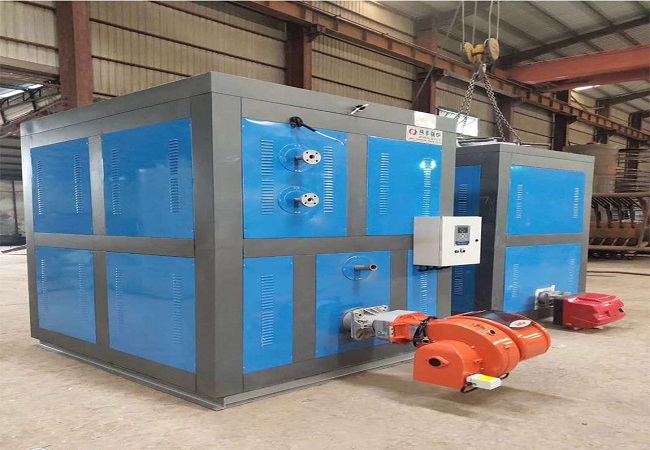
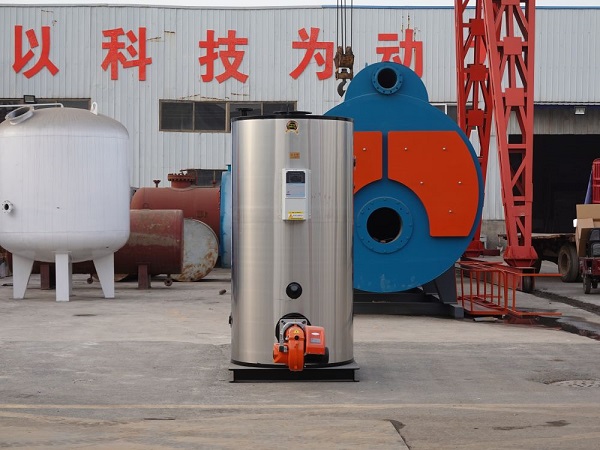
RTO/CO/VOCs waste heat steam boiler
Boiler medium: steam/hot water
Work pressure: 0.1-3.8 Mpa
Capacity: 1-45 t/h
Applicable fuels: waste heat flue gas recovery, high-temperature flue gas recovery and utilization from various enterprise equipment emissions
Application industries: medicine, chemical industry, light industry, textile, building materials, breeding, food and beverage, plastic foam, printing and washing, rubber processing, paper making, wood processing, hotels, clothing, etc.
Introduction
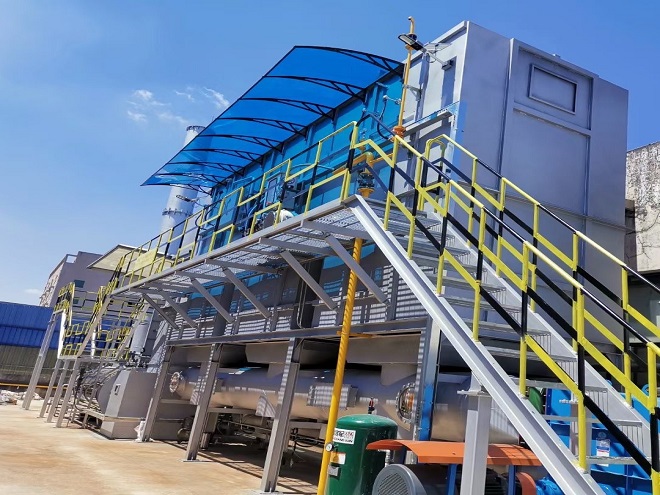
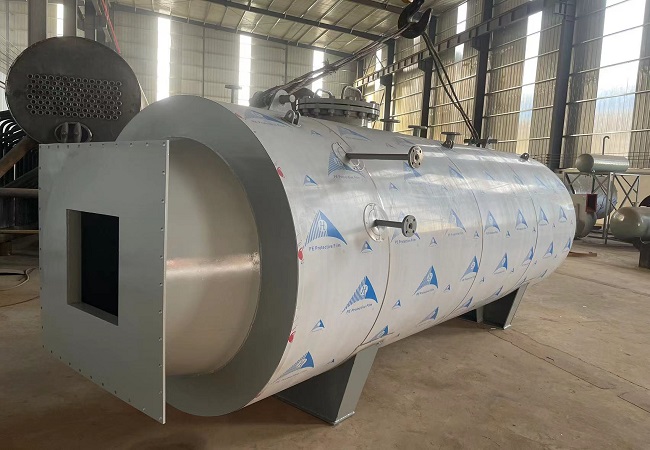
A waste heat boiler refers to a boiler that uses the heat generated by the combustion of waste heat and combustible substances in various industrial processes to heat water to a certain temperature. Oil fired boilers, gas boilers, and coal-fired boilers with smoke boxes and flue heat recovery and utilization are also known as waste heat boilers. Waste heat boilers can produce hot water or steam through waste heat recovery to supply other sections for use.
working principle
Fuel, gas, and coal are burned to produce high-temperature flue gas that releases heat. The high-temperature flue gas first enters the furnace, then enters the waste heat recovery device in the front smoke box, then enters the smoke tube, and finally enters the waste heat recovery device in the rear smoke box flue. The high-temperature flue gas becomes low-temperature flue gas and is discharged into the atmosphere through the chimney. Due to the greatly improved utilization rate of heat released from fuel combustion, waste heat boilers are highly energy-efficient.
classification
Waste heat boilers are classified according to fuel, including oil fired waste heat boilers, gas-fired waste heat boilers, coal-fired waste heat boilers, and foreign medium waste heat boilers. Divided by purpose, it can be used as a waste heat hot water boiler, waste heat steam boiler, waste heat organic heat carrier boiler, etc.
feature
The high-temperature flue gas released from coal-fired combustion is transported through the flue to the inlet of the waste heat boiler, then flows through the heater, evaporator, and economizer, and finally discharged into the atmosphere through the chimney. The exhaust gas temperature is generally 150-180 ℃, and the heat released when the flue gas temperature drops from high to exhaust gas temperature is used to turn water into steam. The boiler feedwater first enters the economizer, where it absorbs heat and heats up to a saturation temperature slightly below the pressure of the steam drum before entering the drum. After the water entering the drum mixes with the saturated water inside the drum, it enters the evaporator along the downcomer below the drum to absorb heat and start producing steam. Usually, only a portion of the water turns into steam, so the mixture flowing inside the evaporator is a mixture of steam and water. The steam water mixture leaves the evaporator and enters the upper drum for separation by a steam water separation device. The water falls into the water space inside the drum and enters the downcomer to continue absorbing heat and producing steam. The steam enters the superheater from the upper part of the drum to absorb heat and turn saturated steam into superheated steam. According to the three stages of the steam production process corresponding to three heating surfaces, namely the economizer, evaporator, and superheater, if superheated steam is not required and only saturated steam is needed, the superheater can be omitted. When there is reheated steam, a reheater can be added.
Introduction to the drum
The drum is equipped with pipe sockets for acid washing, thermal measurement, water level gauge, water supply, dosing, continuous sewage discharge, emergency water discharge, safety valve, air valve, as well as manhole devices. The drum is equipped with two spring safety valves; Two water level gauges, using quartz tube dual color water level gauges, are safe, reliable, easy to observe, and indicate correctly. Sleeve type pipe sockets are used in the inlet pipe holes of the boiler drum and other pipe holes where significant temperature differences may occur to prevent cracks from occurring near the pipe holes due to thermal fatigue. The internal device of the boiler drum is equipped with a separation device for separating steam and water, as well as connecting pipes for boiler feedwater and dosing. The drum is equipped with two supports, one is a fixed support and the other is a movable support.
flue
It consists of an allocation box, a lower box, a pipe group, and an upper box. The boiler feedwater is introduced into the distribution header from the drum. In order to prevent temperature deviation in various parts of the header, the inlet water of the distribution header and the lower header is introduced through a dispersed downcomer. After entering the lower header, the water is dispersed into a circular flue heating surface composed of 132 seamless steel pipes with a diameter of 2400mm and 6mm thick flat steel. Then, a steam water mixture is produced and enters the upper header, which is introduced into the drum through an ascending pipe.
routine maintenance
1. Observe the water level with a water level gauge and promptly repair any damaged water level gauges;
2. Replace the pressure gauge promptly if it is damaged or the dial is unclear;
3. Valves that run, leak, drip, or leak can be repaired, repaired, or replaced in a timely manner;
4. The insulation layer and reinforced inner lining layer are intact.
5. Each shift should regularly check the flexibility and working condition of the transmission device, and lubricate it in a timely manner to ensure its normal operation;
6. Inspect and repair fans, water supply pipeline valves, water supply pumps, etc;
7. Check that all connecting pipes, flanges, and other parts of the boiler system are tightly sealed and must not leak air;
8. If the induced draft fan experiences severe vibration, it should be stopped for inspection. Generally, it is caused by internal impeller wear and should be replaced;
9. The bottom of the boiler header and the heating pipes should not accumulate water on the ground to prevent moisture from corroding the base;
10. Regularly inspect the shaft end seal, main shaft, and electric device operation of the three-way baffle valve and promptly troubleshoot any faults;
11. Regularly check whether the boiler steam pressure, water level, superheated steam production, and temperature are normal;
12. Check all foundation anchor bolts for looseness. Tightness must be ensured, otherwise it may cause vibration;
13. Each shift must flush the water level gauge once;
14. The manual steam or water release test of the safety valve should be conducted at least once a week, and the automatic steam or water release test should be conducted at least once every three months;
15. During normal operation, the pressure gauge should be flushed once a week, and the water storage bend should be calibrated at least once every six months; And mark the red line indicating the working pressure on the dial, and seal it with lead after verification;
16. High and low water level alarms, low water level interlocking devices, overpressure and overtemperature alarms, overpressure interlocking devices, shall undergo alarm interlocking tests at least once a month;
17. Detailed records should be kept of equipment maintenance and safety accessory testing and calibration, and boiler operation management personnel should conduct regular spot checks.
Scope of application
Through research, it has been learned that waste heat utilization affects a wide range of industries and is making progress in various fields of thermal energy utilization. Due to different fields, methods vary Not only has there been a new understanding of the utilization of waste heat from research, but many new methods for waste heat utilization have also been discovered.
For example, there are three main methods for utilizing engine waste heat, namely temperature difference power generation, exhaust gas turbine power generation, and fluorine dragon turbine power generation. Thermoelectric power generation mainly utilizes thermoelectric materials for power generation, but due to the low energy conversion rate of thermoelectric materials, it is necessary to develop thermoelectric exchange materials with higher conversion rates. Exhaust gas turbine power generation is the process of using exhaust gas to drive a turbine and then a generator to generate electricity. This power generation method has a certain impact on the performance of the engine and requires further research.
For example, the utilization of waste heat from air conditioning, as air conditioning is installed indoors, is closely related to household life. Traditional air conditioners generally dissipate the heat absorbed indoors through outdoor units, which not only generates a lot of greenhouse gases but also wastes a lot of heat energy. The following is a detailed introduction to a method of using the waste heat of central air conditioning to process hot water, with the following steps:
Install a water separator in the high-temperature area of the central air conditioning condenser, which contains 50% -100% of the condenser tubes in the high-temperature area and forms an independent closed heat exchange zone;
Therefore, the country advocates vigorously developing waste heat utilization, energy conservation and emission reduction, which plays a positive role in protecting energy and improving the quality of human living environment. In the design of waste heat boilers, how to reasonably divide the temperature range is the basis for arranging the heating surface of the waste heat boiler reasonably and maximizing the utilization of waste heat. Under the given inlet flue gas temperature conditions of the waste heat boiler, there are two requirements for the exhaust gas temperature: one is to limit the exhaust gas temperature and require it to be within a reasonable range; Another approach is to not limit the exhaust temperature and require maximum utilization of waste heat.
development trend
In recent years, with the significant increase in various energy prices, people have begun to focus on the operating costs when choosing boilers. In reality, steam boilers are indispensable for enterprise production, and hot water boilers are indispensable for heating or bathing in hotels, inns, residential areas, and bathing centers. The fuel cost of boilers is a very large expense. In order to avoid the objective phenomenon of "can afford boilers, cannot afford boilers" as much as possible, smart boiler manufacturers have carried out a series of energy-saving renovations on boilers, mainly focusing on the issue of waste heat recovery. Customers who use this type of waste heat boiler now highly recognize its equipment.
In fact, energy conservation is one of the key factors for a country to achieve sustainable development. If we continue to adhere to traditional energy utilization methods and fail to effectively recycle resources, it will worsen the entire resource environment of society and cause rapid depletion of energy. According to reliable information, the consumption of industrial energy in China accounts for the largest share of the overall cost, while the effective utilization rate of energy is only about 30%, and the cost expenditure is much higher than that of developed European countries. Therefore, considering economic benefits, the promotion of energy-saving equipment is an imperative measure. The shortage of energy is a serious challenge facing the whole world at present. In this context, seeking development and developing new and renewable energy is one aspect, and more importantly, putting effort into energy conservation. At present, the design and development of domestic waste heat energy-saving boilers have gradually matured. With the development of society, people will increasingly realize that energy-saving equipment is an inevitable trend. The sign of energy-saving boilers is not only a heavy weight for businesses to promote, but also a major contribution to society and the environment.